
Did you know that SaaS companies have increased over 500% in the last seven years? 👀 This pricing model — of paying a fixed fee every month to use a product — is a great deal for businesses. Users, however, don’t always benefit from it. From Basic to Pro plans, paying a monthly fee for only part of a product is becoming less popular.
Physical products like appliances and furniture have finite prices. But for some reason now in tech, SaaS products have no limits. They even increase their fees over time, never stopping until you remember to cut your subscription. ✂️

In the pricing tier above, an organization’s needs are supposed to fit into three clean categories. Product features are walled, only to be unlocked when more money is shelled out. There’s no room for customization or fluctuations in the usage of the product.
In this model, the product doesn’t fit the customer. The customer has to fit the product.
We live during the reign of TikTok algorithms, account-based marketing, and information overload. With thousands of tech products out there, the only way to stick out is to be more personal.

This is why smart startups are looking at new ways to price their products.
*Usage-based pricing *🛠
This model is increasingly popular with brands like Datadog and AWS. From the beginning, users get access to all features of the product.
Pricing starts low to minimize the user friction that naturally occurs during onboarding. As customers explore the product and use it more, the fees increase. Many companies offer incentives like discounts as usage increases or loyalty rises.

The usage-based pricing model is better than SaaS because it allows users to freely explore the product. This ensures them more long term success and higher lifetime value. However, it runs into the same problem as SaaS: the customer keeps paying, for infinity. And they become victim to price increases overtime.
STOP✋
There is a better way to price your tech product 👇
*The one-time fee *☝🏻
This model is exactly how it sounds: a one-time fee for total access to a product. No subscriptions, no price increases, and no need to remember to cancel.

On average, organizations with more than 1k employees use 150+ SaaS applications. 🤯 Assuming that each SaaS has at least three tiers, that’s 450 different pricing models employees have to study — all with different billing cycles, renewal notice dates, cancellation dates, and price increase clauses.
By paying a one-time fee upfront for an entire product, customers pay for what they need, when they need it. They aren’t bound by user seats, usage, or time restraints. And they aren’t burdened with having to remember to cancel the subscription if they don’t need it anymore, or having to check in on the price of an invoice. They get the full product, all at once, for life.
FAIRMINT 🚀
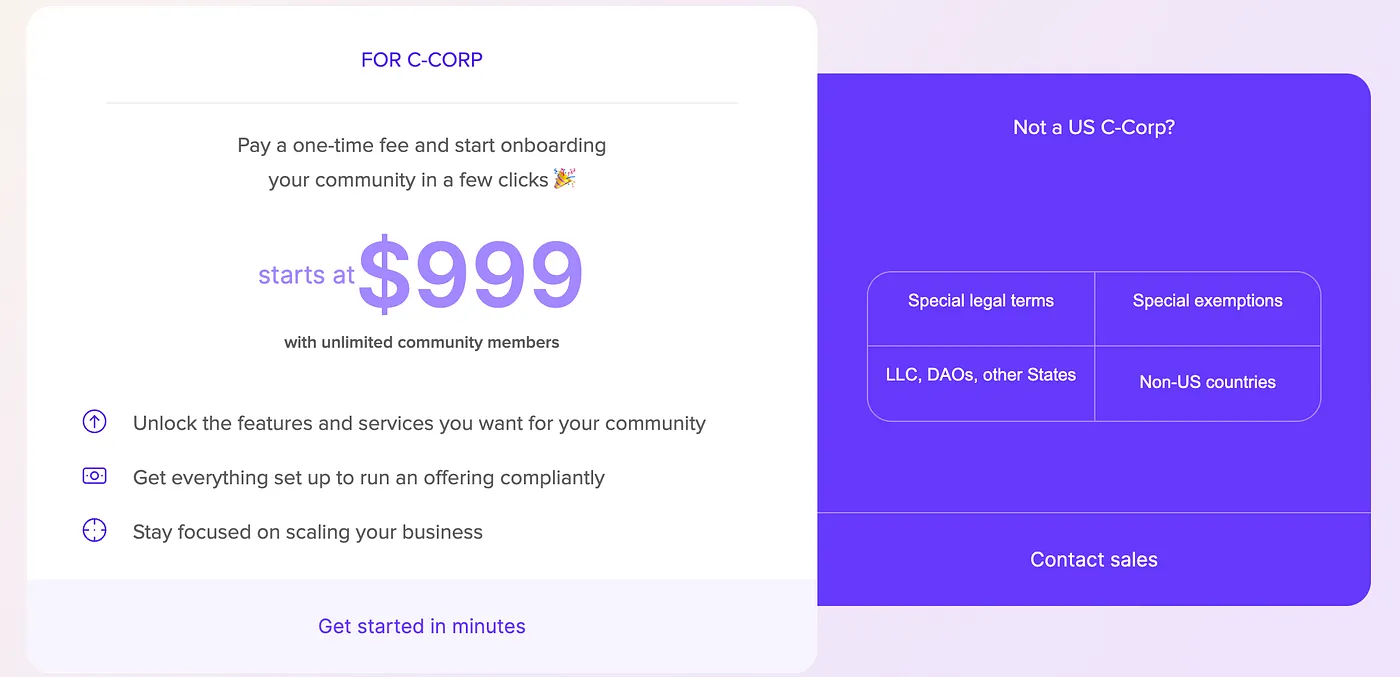
At Fairmint, we empower founders to turn their customers into investors. Contributors can easily invest time or cash in exchange for equity. This is the ultimate way to ensure product-market fit.
When your community is invested in your company, user engagement rises. They become your biggest promoters and publicists. We’ve seen that when founders put an “Invest Now” button at the end of their checkout flows, they get an impressive 11% conversion rate of customers turning into investors.
SaaS model pricing simply doesn’t accommodate businesses with growing communities. Transparent, fair, and upfront pricing is key. That’s why we’ve moved to a one-time fee for lifetime access. We’ve lowered all costs to offer the most convenient pricing model. It’s a no-brainer.
Out with the SaaS, in with the new 💫 Learn more on our pricing page.